Stone repointing in Aberdeen
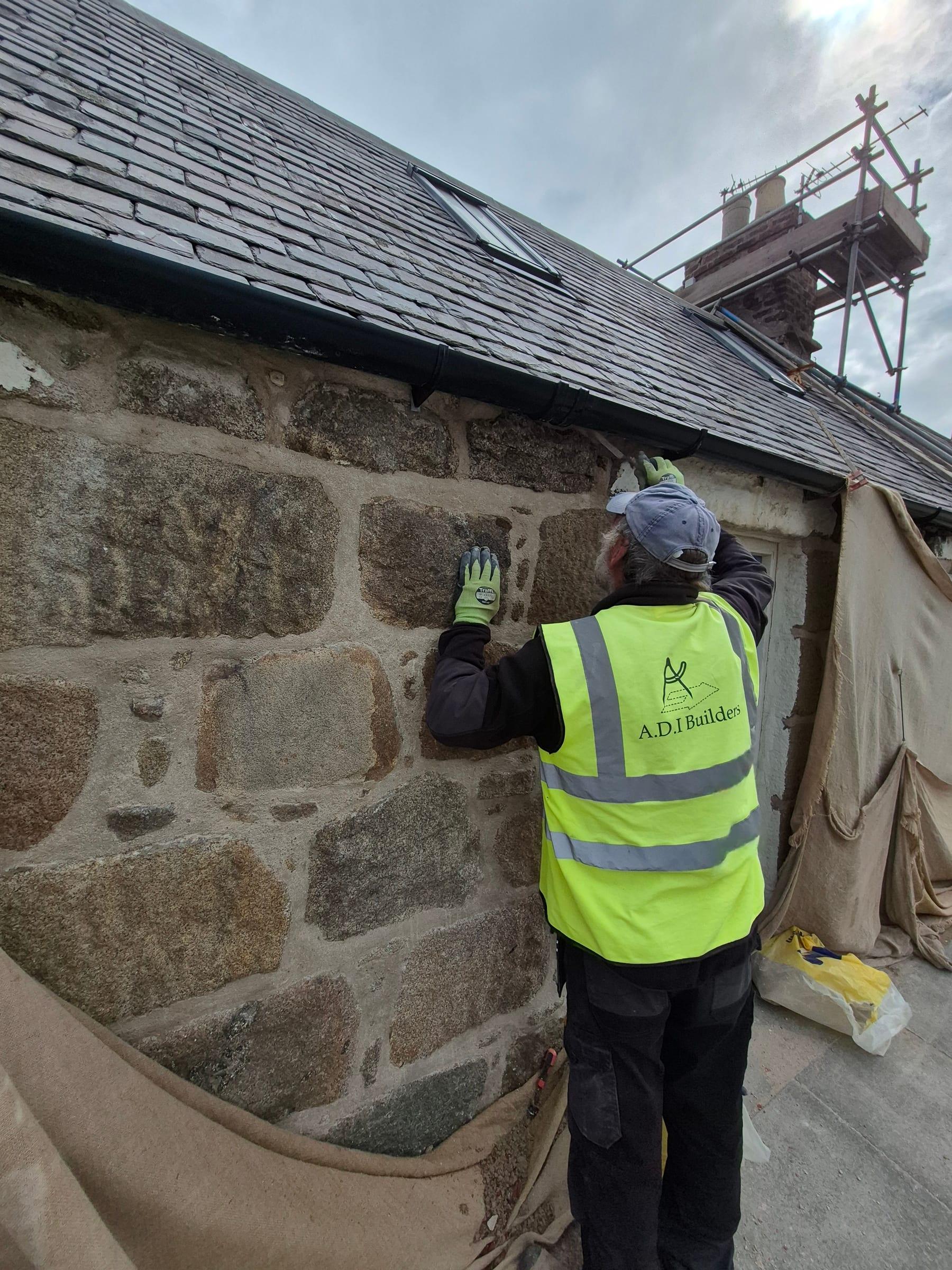
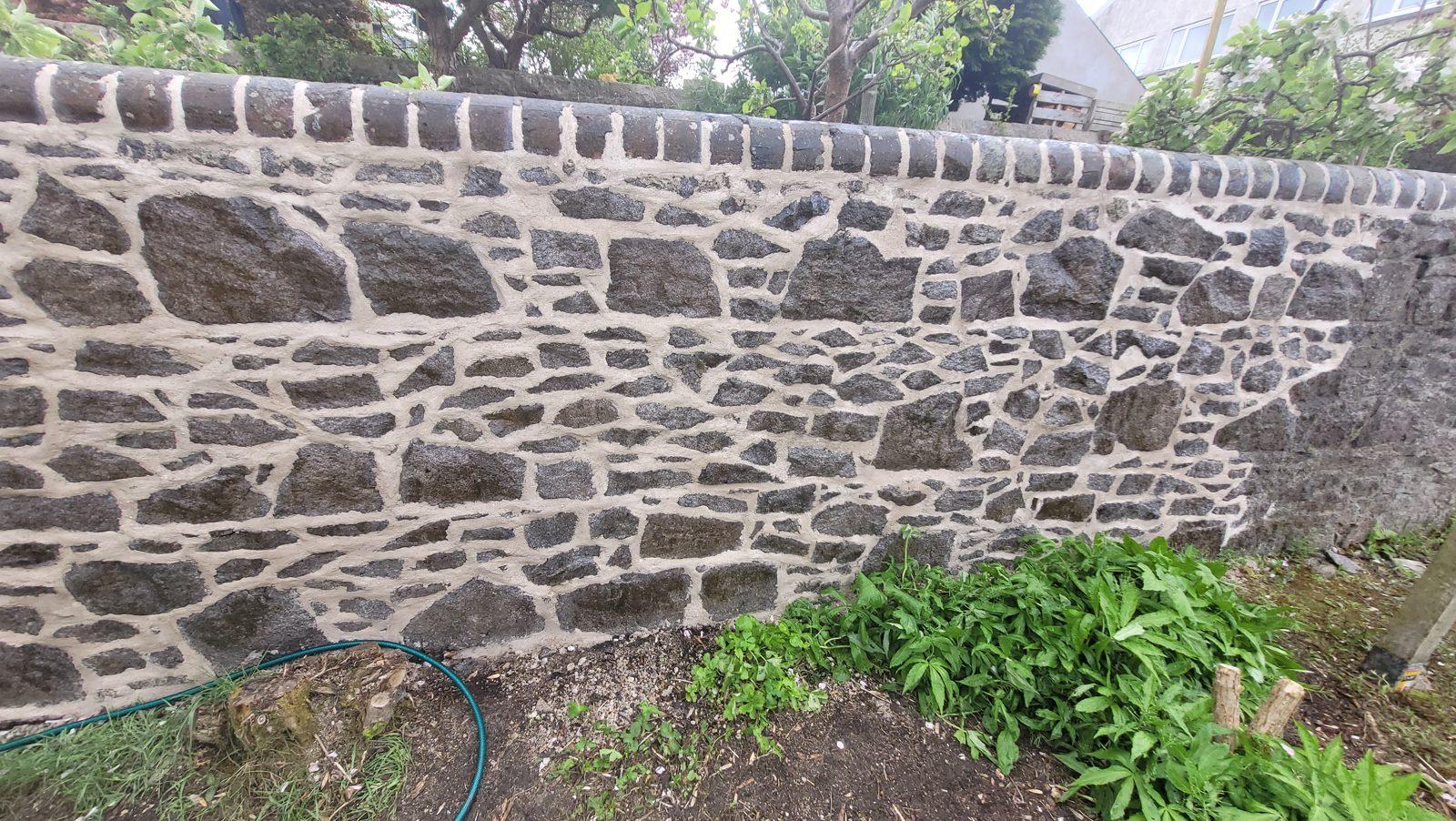
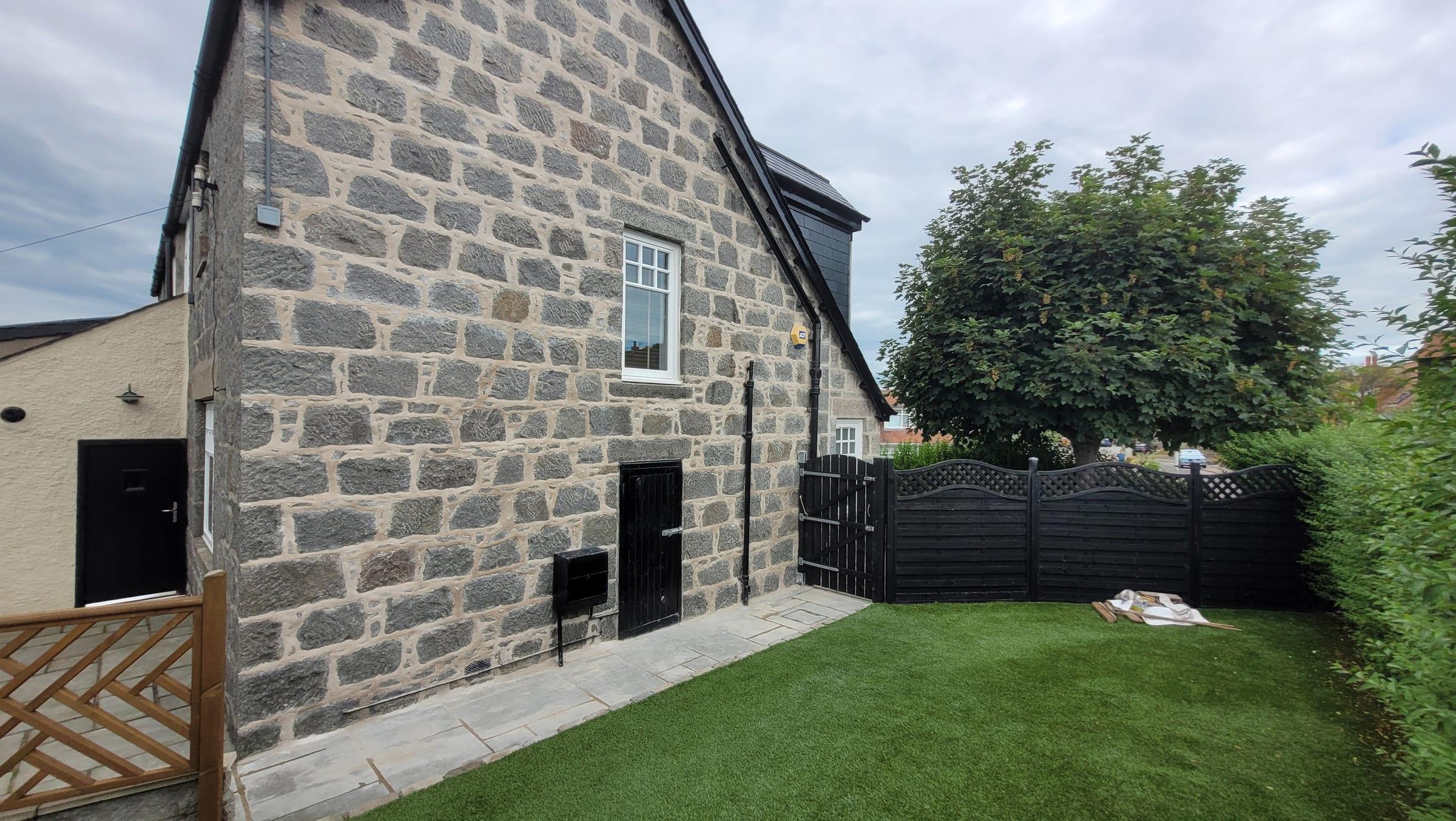
We repair failed mortar joints in granite, sandstone and rubble stone walls. Work ranges from local repairs to complete elevations, gables and boundary walls. We check the condition of the joints before recommending how much needs doing.


Warning signs
Signs your joints need assessment
Mortar joints are designed to wear before the stone does. When they fail, rain can get into the wall and frost can push the joints apart. These are reasons to have the joints checked:
A soft lime joint is not automatically defective, and damp patches do not prove that pointing is the cause. We check whether mortar is loose, missing or no longer protecting the joint, and whether the surrounding stone is sound. This helps separate local repairs from a larger repointing job.
- Mortar crumbling, sandy or easy to scrape out
- Gaps or recesses in the joints
- Cracked or loose pointing coming away from the stone
- Plants growing out of the joints
The basics
Mortar for traditional stone
Repointing traditional stone usually calls for a compatible lime mortar, selected for the stone, the joint and the exposure.
Our lime pointing page explains how we select the mix, prepare the joints and protect the new mortar while it cures.
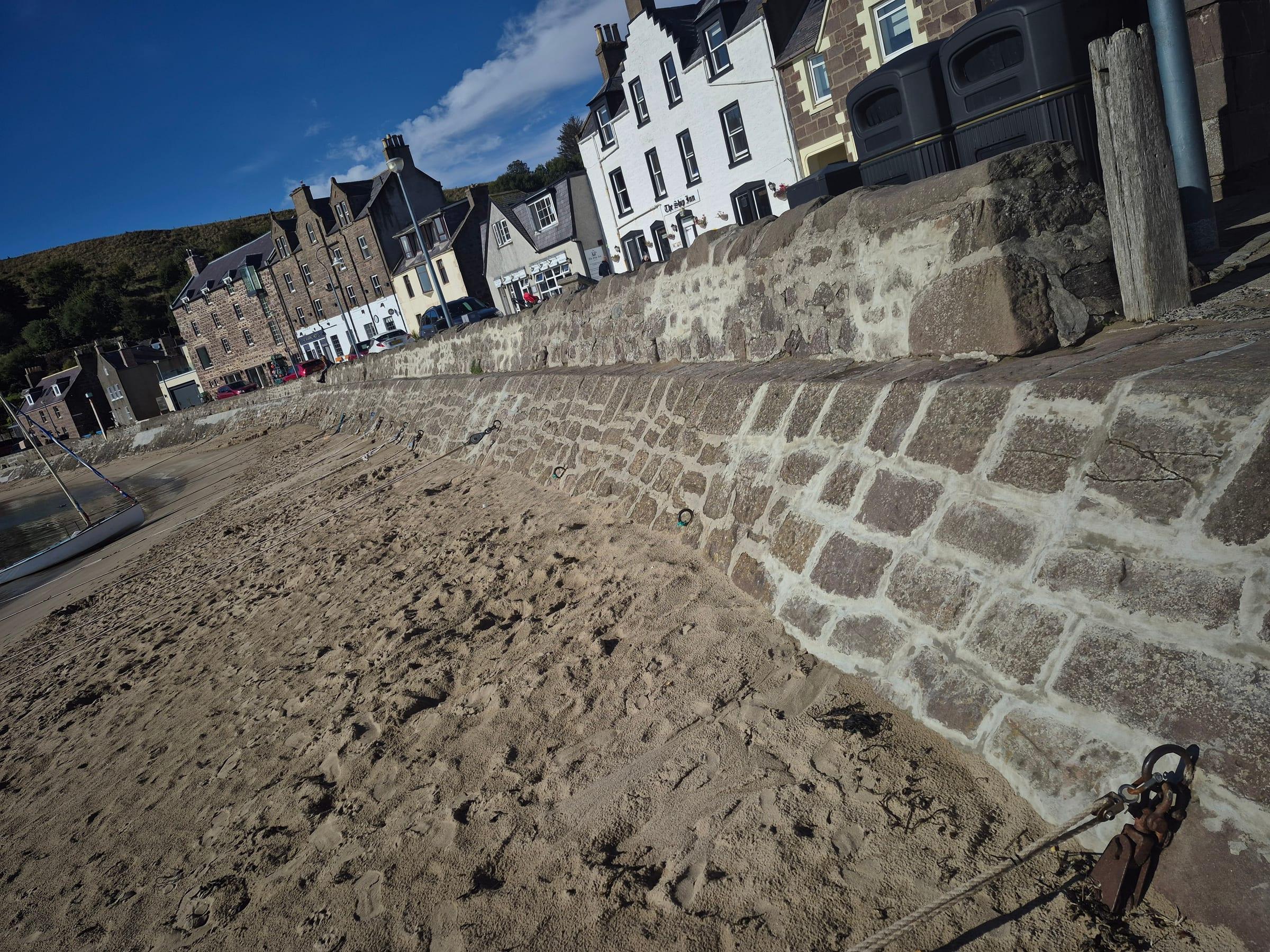
What we do
What we repoint
- Complete elevations and individual walls
- Gable ends and exposed walls
- Localised repointing as part of wider repairs
- Garden and boundary walls
- Stone outbuildings and steadings
Our process
The process
- 01
Assess
The joints and the condition of the surrounding stone.
- 02
Rake out
Failed mortar to a sound depth, without damaging the edges.
- 03
Prepare
The joints, cleaning them out and dampening them as appropriate.
- 04
Repoint
With a compatible mortar, well compacted into the joint.
- 05
Finish
To match the building, and protect the new work while it cures.
FAQ