
Harling and roughcasting in Aberdeen
Modern dry-dash finishes and roughcast repairs for houses, extensions and walls across Aberdeen and Aberdeenshire, with the wall underneath assessed before we choose the preparation and coating system.


The basics
Modern dry dash for suitable masonry
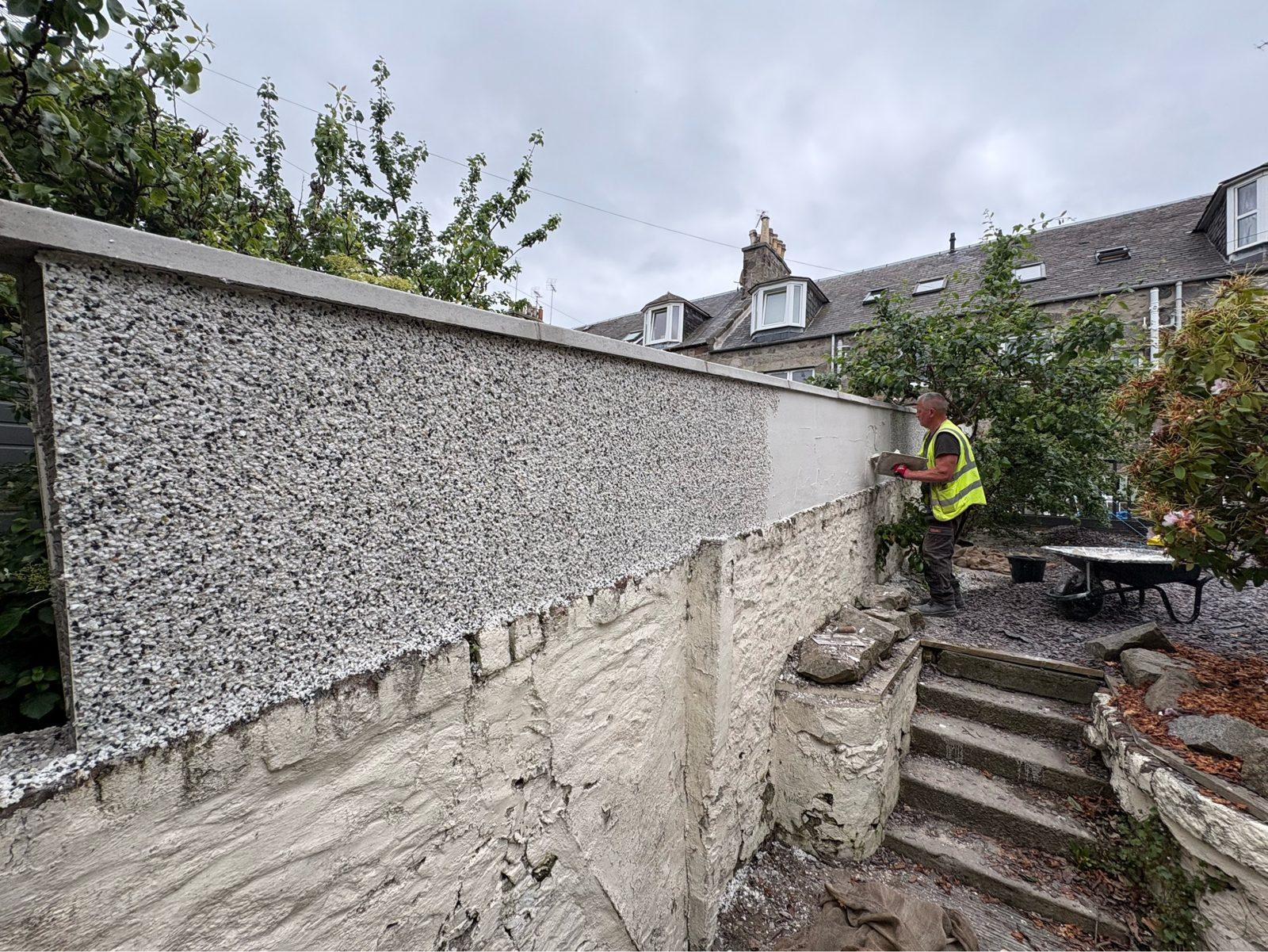
We carry out modern dry-dash finishes and roughcast repairs to suitable masonry, including new blockwork and renewal of failed coatings. We assess the wall underneath before choosing the preparation and coating system.
Our service covers modern cement-based systems rather than traditional lime harling. Traditional solid stone walls need separate consideration of moisture and material compatibility.
What we do
The system and why we use it
Our two-coat dry-dash work uses SikaWall-100 Base Coat and SikaWall-530 Top Coat.
- 01
Base coat
SikaWall-100 prepares the background for the finish.
- 02
Receiving coat
SikaWall-530 holds the decorative aggregate, cast into it while it's fresh, and contributes to the finished colour.
- 03
Factory-batched
Defined mixing requirements and identifiable batches help keep the finish consistent across the work, used as a compatible system on an appropriate background.
The system still depends on sound preparation and suitable weather conditions.
Our services
What we do
- Dry-dash finishes on new blockwork
- Roughcast repairs: cracked, hollow or missing areas cut out and patched to the closest practical match
- Renewal of failed coatings on suitable masonry
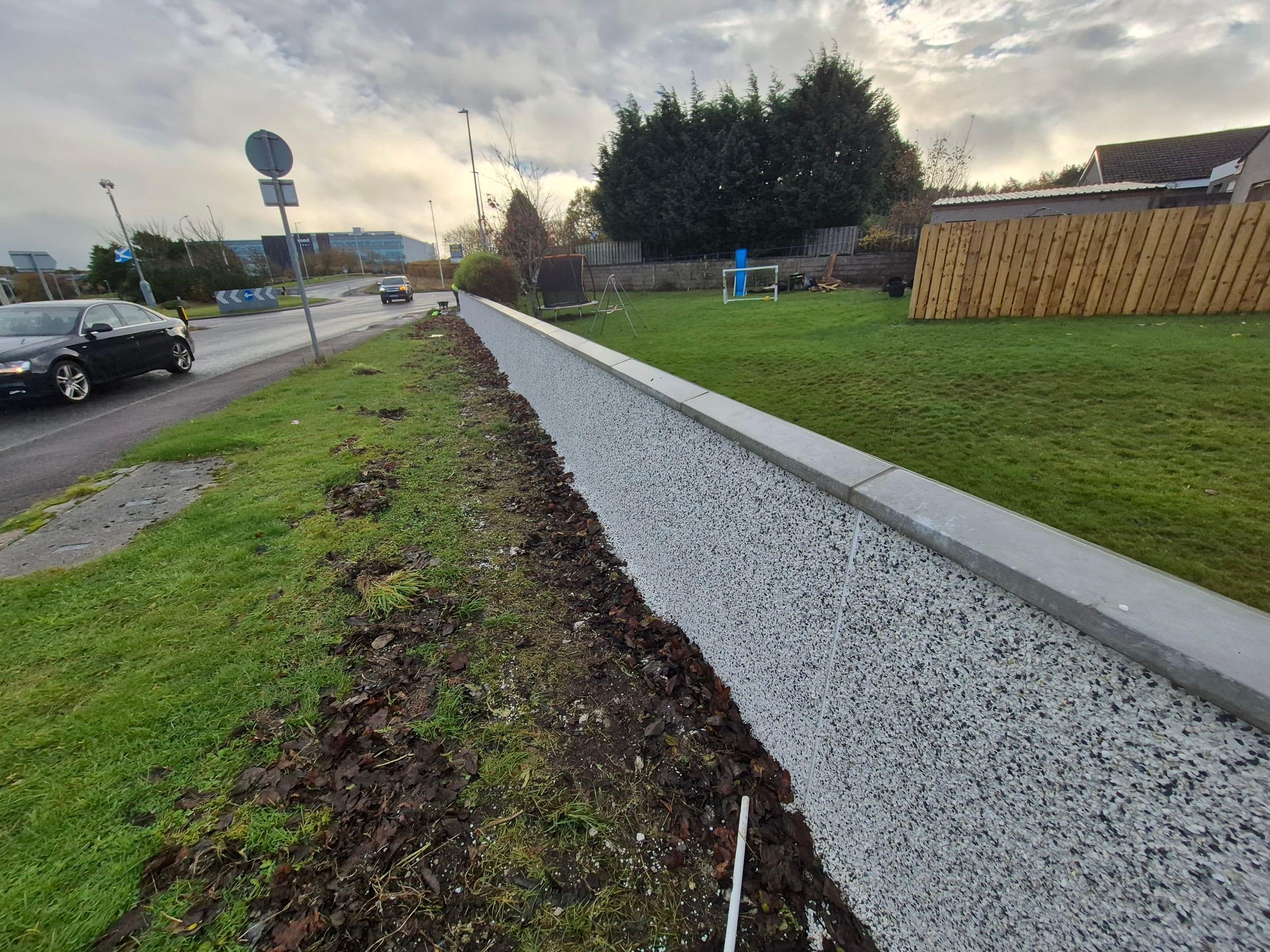
- Dry dash and roughcast on garden and boundary walls
Projects
Recent harling & roughcasting projects
01 / 01
Our process
How we prepare and apply dry dash
- 01
Assess
We check the wall underneath. New blockwork, stripped masonry and an existing rendered wall need different assessments.
- 02
Prepare
Loose or hollow material removed and the exposed masonry checked before reinstatement.
- 03
Detail
Copings, drips, window edges and existing movement joints considered as part of the agreed scope.
- 04
Apply
The base coat, then the receiving coat with the aggregate cast into it while it's fresh.
A new surface finish should not conceal an unstable background or leave water entering behind it. Overcoating is considered only where the existing layers are suitable and a specified refurbishment system is appropriate.
Materials
Choosing the finish and matching repairs
The receiving-coat colour and aggregate are selected together. For repairs, we use photographs and a sample where available to find the closest practical match.
Existing weathering means a new patch may remain visible. For larger new areas, a sample helps agree the texture and colour before the main application.
Warning signs
Signs your roughcast needs attention
- Cracks you can see from the ground
- Hollow-sounding or bulging patches
- Sections falling away, especially around windows, sills and the base of the wall
- Green staining or damp patches on the finish
FAQ